


Personality Disorders and Addiction Treatment in Fresno County, CA

Is Your Addiction Treatment Covered by Insurance? Check Your Benefits
Describe What You or Your Loved One Is Struggling With Right Now
24/7 Confidential Free Helpline Is Available. Speak With Someone Today

WHAT TO EXPECT

Personality disorders involve persistent patterns of behavior and thinking, while substance use disorders involve unhealthy substance consumption. When these two conditions occur together, known as dual-diagnosis treatment or treatment for co-occurring disorders, it can present unique challenges. Understanding how these conditions interact is key to providing effective treatment and improving treatment outcomes.

First Steps Recovery can provide support and guidance to navigate these complexities and facilitate the journey toward healing and recovery. Our comprehensive approach addresses the underlying issues of both personality disorders and addiction, empowering individuals to achieve lasting wellness. Through personalized treatment plans, therapeutic interventions, and compassionate care, we strive to help individuals regain control of their lives and build a foundation for a brighter future.

woman with personality disorder

What are Personality Disorders?

Personality disorders are a type of mental health condition that affects the way people think, feel, and behave. These conditions can cause significant distress and problems in relationships, work, and other areas of life.

Unlike temporary mood changes or quirks in behavior, personality disorders involve persistent patterns of thoughts, emotions, and behaviors that deviate from what society considers normal. These patterns tend to be rigid and inflexible, making it challenging for individuals to adapt to different situations or relate to others effectively.

There are several types of personality disorders, each with its own set of symptoms and characteristics. They all share the common trait of causing difficulties in functioning and relating to others. Treatment for personality disorders typically involves therapy, medication, and support to help individuals manage their symptoms and improve their quality of life.

What are the Signs and Symptoms of Personality Disorders?

patients with personality disorders on group therapy

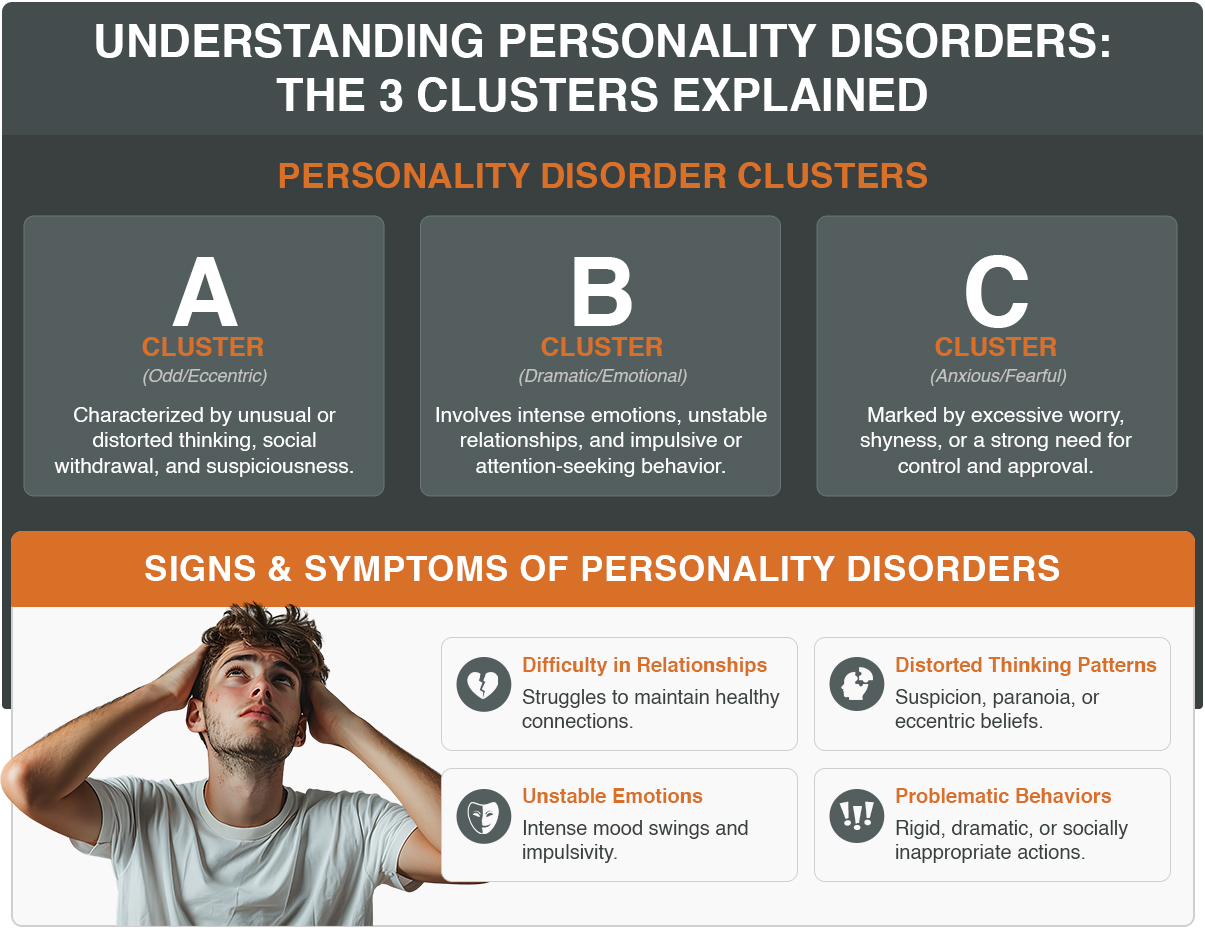
Signs and symptoms of personality disorders can vary depending on the specific type. It can manifest differently in each individual, and not everyone with a personality disorder will exhibit all of them, but some signs include:

Difficulty in Forming and Maintaining Relationships

Individuals with personality disorders often struggle to establish and sustain healthy relationships. They may have intense, unstable relationships, difficulty understanding others’ perspectives, or have trouble trusting others.

Individuals with personality disorders may have a distorted or unstable self-image. They may struggle with feelings of worthlessness, inadequacy, or emptiness. This can lead to frequent changes in goals, values, or career choices.

Emotional dysregulation is a key feature of many personality disorders. This can manifest as intense and unstable emotions, such as anger, anxiety, sadness, or irritability. Individuals may have difficulty controlling their emotions, leading to impulsive behaviors or mood swings.

Emotional dysregulation is a key feature of many personality disorders. This can manifest as intense and unstable emotions, such as anger, anxiety, sadness, or irritability. Individuals may have difficulty controlling their emotions, leading to impulsive behaviors or mood swings.

People with personality disorders may have limited coping mechanisms and struggle to deal with stress or adversity. They may engage in maladaptive coping strategies, such as avoidance, self-harm, or using addictive substances to manage their distress.

Some personality disorders, such as paranoid personality disorder, are characterized by pervasive distrust and suspicion of others’ motives. Individuals may perceive benign actions as threatening and may be prone to holding grudges or seeking revenge.

While some individuals with personality disorders may exhibit intense and unstable relationships, others may withdraw from social interactions altogether. They may prefer solitude to avoid potential conflicts or rejection.

Certain personality disorders, such as schizotypal personality disorder, may involve eccentric beliefs or perceptual distortions. Individuals may experience magical thinking, odd beliefs, or unusual perceptual experiences that deviate from cultural norms.

Over time, the patterns associated with personality disorders can interfere with a person’s ability to manage everyday responsibilities and long-term goals. Individuals may have trouble maintaining consistent employment, keeping up with school or financial obligations, or navigating major life transitions. These ongoing challenges can make it difficult to build stability and independence, often leading to disruptions in work, education, and other areas of daily life.

What are the Different Types of Personality Disorders?

Three types of personality disorders and symptoms of personality disorders

Personality disorders are classified into several types, grouped according to the DSM-5 (Diagnostic and Statistical Manual of Mental Disorders, Fifth Edition) classification system:

Cluster A involves disorders characterized by “odd and eccentric” behaviors, including:

  • Paranoid Personality Disorder: Persistent distrust and suspicion of others.
  • Schizoid Personality Disorder: Lack of interest in social relationships and emotional expression.
  • Schizotypal Personality Disorder: Eccentric behavior, unusual beliefs, and difficulties with close relationships.

Cluster B consists of disorders characterized by dramatic, erratic, and emotional behaviors. These include:

  • Antisocial Personality Disorder: Disregard for others’ rights, impulsivity, and deceitfulness.
  • Borderline Personality Disorder: Instability in relationships, self-image, and emotions.
  • Histrionic Personality Disorder: Excessive attention-seeking and emotional instability.
  • Narcissistic Personality Disorder: Grandiose sense of self-importance and lack of empathy.

Cluster C is characterized by personality traits associated with fearfulness or anxiety. These include:

  • Avoidant Personality Disorder: Social inhibition and hypersensitivity to criticism.
  • Dependent Personality Disorder: Excessive need to be taken care of and reliance on others.
  • Obsessive-Compulsive Personality Disorder (OCPD): Preoccupation with orderliness and perfectionism.

How Addiction Impacts Personality Disorders

patients with addiction and personality disorders

Personality disorders and addiction often interact, forming a complex relationship that exacerbates each other’s symptoms. Individuals with personality disorders may turn to substances as a means of self-medication to cope with their symptoms. In contrast, impulsivity and sensation-seeking behaviors characteristic of disorders like borderline personality disorder can lead to risky substance use.

Comorbidity with personality disorders positively correlates with the severity of a person’s addiction. Patients with comorbid personality disorders and substance use disorders can experience more severe problems of dependence, including more frequent relapses and shorter abstinence periods. The presence of comorbid personality disorders can be a predictor of poor prognosis, with poorer treatment response and outcome.

Additionally, using addictive substances may serve as a form of escapism from emotional distress. Social factors such as isolation and peer influence can also contribute to the co-occurrence of these conditions. Stressful environmental influences can aggravate symptoms of both addiction and personality disorders. Shared risk factors and the interference of substances can complicate the therapeutic process for personality disorders.

Research shows that somewhere between 65 and 80 percent of those dealing with addiction have been diagnosed with a personality disorder. The risk of comorbid alcohol use disorder is increased fivefold and drug use disorder twelvefold among patients with a personality disorder. Shared biology between personality disorders and addiction affects overlapping brain regions responsible for reward systems, emotional regulation, and impulse control.

To effectively intervene, it’s crucial to address both the underlying personality disorder and the person’s destructive use of substances at the same time. The risk factors for both conditions can often interlap, and both personality disorders and addiction can require lifelong work to maintain healing. Understanding the intricate relationship between personality disorders and addiction is essential for enhancing treatment results and aiding individuals in escaping the cycle of dysfunction.

What Type of Substance Abuse Commonly Co-Occurs with Personality Disorders?

Addictions come in various forms and intensities, as each individual possesses a unique chemical composition, personal background, and genetic foundation. Some individuals may combine multiple substances or mix them with prescribed medications, while others may have a preferred drug or alcohol of choice.

The effects of different drugs on specific symptoms vary depending on the type of personality disorder one experiences. Common addictions that often coincide with personality disorders include

Regardless of the specific addiction, its impact on personality disorders is consistently negative. Being afflicted with a personality disorder and addicted to substances can exacerbate symptoms, deteriorate mental health, and complicate treatment.

Dual-Diagnosis Treatment for Personality Disorders and Addiction

Treatment for individuals with both personality disorders and addiction issues often involves an integrated approach. This means addressing both conditions simultaneously to provide comprehensive care and improve outcomes.

Dual-diagnosis treatment typically integrates therapeutic modalities aimed at managing the symptoms of the personality disorder while also addressing the patterns of substance abuse. This may include:

  • Detox: This process (which can sometimes involve medication to supplement healing) involves medical support and therapy to ready the individual for treatment, in addition to purifying the body from addictive substances.
  • Talk Therapy: Verbal exploration of past traumas, emotional wounds, and current recovery hurdles. This might take the form of various forms of therapy (as deemed necessary by addiction specialists).
  • Cognitive Behavioral Therapy (CBT): This therapy is designed to be action-oriented, giving the person autonomy to question and rework their own thought patterns. CBT is used to treat many different forms of mental health conditions, from depression disorders to antisocial personality disorder.
  • Dialectical Behavior Therapy (DBT): Originally designed to treat borderline personality disorder, this specialized form of talk therapy assists in developing mindfulness, tolerance, interpersonal skills, and emotional regulation.
  • Nutritional Therapy: This type of treatment aids in rebuilding the immune system and enhancing organ function, which can often be damaged during periods of addiction.
  • Mindfulness Therapy: Participants learn how to incorporate mindfulness techniques. This may also involve wellness-based practices like yoga.
  • Relapse Prevention: These services and support systems help ensure that the person doesn’t relapse back into using substances after leaving the treatment program.

All of these services are available at our treatment centers in California, providing a supportive environment for individuals to focus fully on recovery.

Medication management may be utilized to address mental health symptoms or to support recovery from substance abuse. By simultaneously addressing both aspects, individuals can work towards long-term recovery via dual-diagnosis treatment.

Receive Treatment for Personality Disorders and Addiction at First Steps Recovery

treatment for addiction and personality disorders

At First Steps Recovery, we excel at addressing the complex interplay between personality disorders and substance abuse through our specialized dual-diagnosis program. Our approach is tailored to meet the unique needs of each individual, ensuring comprehensive care that targets both conditions simultaneously.

By integrating therapeutic interventions, personalized support, and evidence-based treatments, we empower individuals to overcome dysfunction and attain sustainable recovery. If you’re facing the challenges of co-occurring personality disorders and substance abuse, let us guide you toward healing and a brighter future. Take the first step towards recovery and contact us today.


Picture of Meet Our Team
Meet Our Team

From our certified therapists and nurses to our emotional support animal "Cooper", our entire team is dedicated to the health and success of our clients throughout our program and beyond.

Help Is Available. Speak With Someone Today.

Our admission team is available to help 24/7.

Have questions about how our treatment programs works? Let's talk.

Variety of Co-Occurring Mental Health Treatments We Offer

We treat a variety of different substance abuse and mental health issues at our facilities. Whether you find yourself or a loved one addicted to substance abuse or struggling with mental health disorders, we’re fully equipped to provide you with the help you need.
ADD & ADHD

ADHD, or ADD, is a common neurodevelopmental disorder with attention and impulse control difficulties that can lead to substance abuse. Treatment with therapy and medication is crucial.

Learn More
Anxiety Disorder

Anxiety disorder is a mental health condition characterized by excessive and persistent feelings of fear, worry, and apprehension that can significantly impact a person's daily life.

Learn More
Bipolar Disorder

Bipolar disorder is a mental health condition characterized by extreme mood swings, including episodes of mania (elevated mood and energy) and depression (low mood and loss of interest).

Learn More
Depression

Depression is a mental health disorder characterized by persistent sadness, loss of interest, and other emotional and physical symptoms

Learn More
Eating Disorder

An eating disorder is a mental health condition characterized by abnormal eating habits. Getting help is important to address physical and psychological health risks, improve quality of life, and promote recovery.

Learn More
Personality Disorders

Personality disorder is a mental health condition characterized by unhealthy patterns of thinking, behaving, and relating to others. Getting help is crucial to improve relationships, coping skills, and overall well-being.

Learn More
PTSD/Trauma

PTSD (Post-Traumatic Stress Disorder)/Trauma disorder is a mental healtah condition resulting from experiencing or witnessing traumatic events. Getting help is important to process trauma, reduce symptoms, and improve overall quality of life.

Learn More
Schizophrenia

Schizophrenia is a mental health disorder characterized by hallucinations, delusions, and disorganized thinking. Getting help is vital to manage symptoms, improve functioning, and enhance overall quality of life.

Learn More

Have questions about our substance abuse treatment programs? Let’s talk.

THERAPIES

Experiential Therapies & Evidence-Based Modalities in Fresno County

You’ll find we aren’t like typical addiction recovery programs here at First Steps Recovery. We have a variety of different therapies and on-site services that set us apart.

Clinical Therapies

Our detoxification program features 24-hour monitoring and professional guidance from licensed detox technicians.
Learn More

Experiential Therapies

A highly individualized treatment experience designed for lasting sobriety using evidence-bsed and holistic treatment options.
Learn More

Holistic Therapies

Our IOP offers individuals the ability to receive the high-quality, personalized level care of our rehab, but the flexibility to continue their daily lives.
Learn More

Aftercare Services

Individuals in the alumni program are invited to stay connected for meetings, events, and resources that are intended specifically for First Steps graduates.
Learn More

ALUMNI TESTIMONIALS

First Choice for Drug & Alcohol Detox in Fresno County

Learn why people choose to start their recovery at First Steps Recovery in Clovis, Fresno County.

Outstanding

5/5
My experience with First Steps and their entire team has not only helped me to gain sobriety but maintain it now for knots 18 months. The 24 or so days I spent there was the best thing that happened. My kids have their mom, the parents have their daughter but most importantly I have myself back!!

Dayatra L.

Amazing Experience

5/5
Amazing people. Super supportive and always there when you need them. My counselor, Amanda, makes it fun but also takes you to uncomfortable places in the best way. I recommend First Steps to anyone struggling with addiction.

Melissa B.

Above and Beyond

5/5
I attended First Steps outpatient program and was very happy with the help I received. I felt the staff genuinely cared about the health and well being of the people there. They went above and beyond to help me meet my goals and keep them.

Bruce G.

Have questions about how our alumni program works? Let's talk.

PAYMENT OPTIONS

Are You Covered for Addiction Treatment?

First Steps Recovery is an in-network provider with most insurances! Regardless of where you live, our skilled and compassionate drug treatment counselors in Fresno can help you and your family get the help you need to get on the road to recovery.
Anthem_600x172
aetna_600x172
kaiser_600x172
healthnet_600x172
halcyon

Accessibility Toolbar