Online IOP vs In-Person IOP: How to Choose

Is Your Addiction Treatment Covered by Insurance? Check Your Benefits
Describe What You or Your Loved One Is Struggling With Right Now
24/7 Confidential Free Helpline Is Available. Speak With Someone Today

WHAT TO EXPECT

Online IOP and in-person IOP deliver the same core treatment, which includes group therapy, individual counseling, and skills-based education, but they differ in where that care takes place. Online IOP happens through a secure video platform, while in-person IOP requires attending sessions at a clinic.

The right choice depends on a person’s living situation, support system, medical needs, and schedule. First Steps Recovery, certified by LegitScript, accredited by The Joint Commission, and operating every level of care under a current California Department of Health Care Services (DHCS) credential, offers both formats to serve adults across California, including veterans, members of the LGBTQIA+ community, and others seeking structured outpatient support. Exploring the full range of treatment options can help clarify which level of care fits best.

man thinking about virtual IOP vs in-person IOP

What Is the Difference Between Online IOP and In-Person IOP?

The core difference between online IOP and in-person IOP is location. Online IOP connects participants to their treatment team and peers through a video platform, from wherever they have a private space and internet access. In-person IOP requires traveling to a clinic on scheduled days.

Both formats sit at the same level of care in the ASAM criteria. Intensive outpatient treatment typically requires nine hours of treatment per week for adults, and six hours for adolescents. The clinical content, including therapy modalities and group structure, is largely the same across both formats.

What Is an Intensive Outpatient Program?

An intensive outpatient program (IOP) is a structured level of addiction treatment that allows people to live at home while attending therapy several days per week. IOP is more intensive than standard outpatient care, but less restrictive than residential treatment.

IOP is commonly used as a step-down from residential or partial hospitalization programs (PHP), or as a primary treatment option for people whose substance use disorder does not require 24-hour supervision.

How Do Online and In-Person IOPs Work?
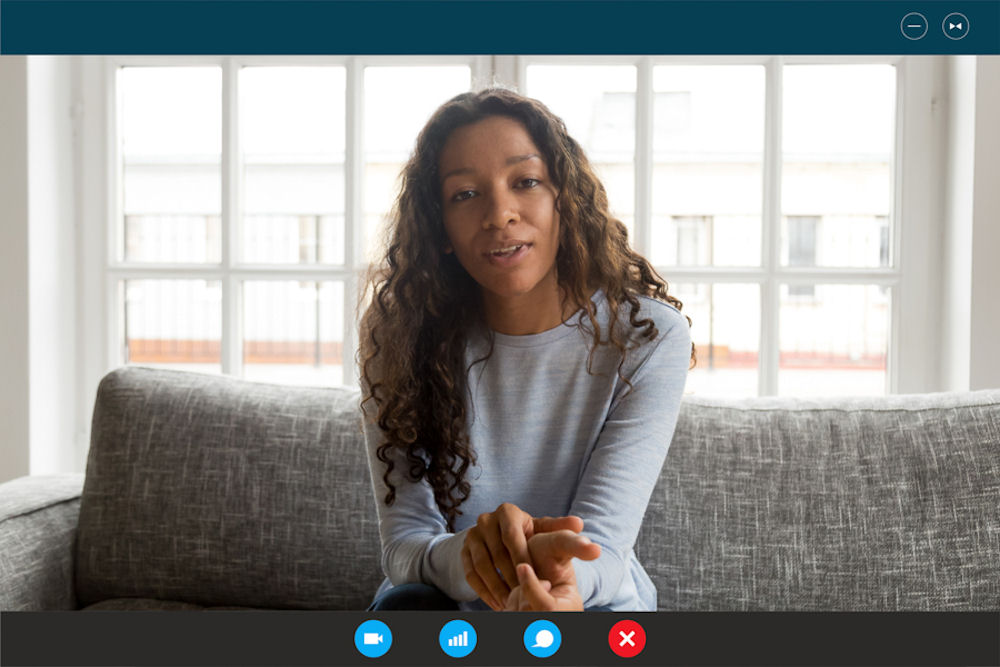
virtual IOP client talking to a therapist

Both online and in-person IOPs follow a structured weekly schedule with group therapy as the primary treatment modality, supplemented by individual sessions and psychoeducation. The main difference is the delivery method and the physical environment.

Online IOP: How It Works

Online IOP, sometimes called virtual IOP or telehealth IOP, uses HIPAA-compliant video conferencing to connect participants with licensed clinicians and peer groups. Sessions typically run on a set weekly schedule, and participants join from home or another private location.

First Steps Recovery offers an online IOP and PHP program for adults who need structured care without requiring daily travel. Our program increases accessibility to care, especially to those who live in areas with fewer treatment options.

In-Person IOP: How It Works

In-person IOP takes place at a licensed outpatient facility, where participants attend scheduled sessions at the clinic and interact directly with clinical staff and peers in a shared physical space. This format makes it easier to access on-site services such as medication management, urine drug screening, and psychiatric evaluations.

First Steps Recovery’s outpatient program in Clovis provides in-person IOP for adults in the Central Valley. The program is part of a full continuum of care that reflects First Steps Recovery’s commitment to comprehensive, effective treatment for adults with substance use disorders and co-occurring mental health conditions.

Virtual IOP and In-Person IOP: Side-By-Side Comparison

The two formats share the same clinical foundation but differ in practical ways that matter for daily life.

How Do Schedules and Flexibility Compare?

Online IOP generally offers more scheduling flexibility because participants do not need to commute. This can make it easier for people with jobs, childcare responsibilities, or limited transportation to stay consistent with treatment.

In-person IOP follows a fixed clinic schedule, which provides external structure that some people find helpful for building routine. However, it requires reliable transportation and the ability to be physically present at set times.

Both formats are covered by many major insurance plans. Out-of-pocket costs vary by insurance plan and provider, so individuals should verify their specific benefits before enrolling. First Steps Recovery works with insurers including Aetna, Anthem Blue Cross, Kaiser Permanente, Blue Cross Blue Shield, Health Net, TriWest, and Tricare. Our admissions team can help you verify your insurance and understand treatment costs before enrollment.

In-person IOP provides face-to-face accountability, which some people find more motivating. Being physically present with peers and clinicians can strengthen group cohesion and make it harder to disengage.

Online IOP requires more self-directed accountability, since participants manage their own environment and minimize distractions independently. That said, remote group therapy can still build meaningful peer connections when it is well facilitated, and participants have a private, distraction-free space to join from.

In-person IOP makes it easier to coordinate same-day medical or psychiatric services, since clinical staff are on-site. This is particularly relevant for individuals managing co-occurring mental health conditions or who are on medication-assisted treatment (MAT).

Online IOP can still support MAT, but medication management typically requires separate in-person appointments with a prescribing provider. People with complex psychiatric needs or those early in MAT may benefit from the closer clinical oversight that in-person care provides.

Who Should Choose Online or In-Person IOP?

women discussing IOP options in during therapy

The best format is the one a person will actually attend consistently. Both are clinically valid; the decision comes down to individual circumstances.

Who Should Choose an Online IOP?

An online IOP may be a better fit for people who:

  • Live far from a treatment facility or lack reliable transportation
  • Have work or caregiving responsibilities that make clinic attendance difficult
  • Have already completed a higher level of care and are stepping down
  • Live in a stable, supportive home environment
  • Are comfortable using video technology

Who Should Choose In-Person IOP?

An in-person IOP may be a better fit for people who:

  • Are early in recovery and benefit from structured, external accountability
  • Have co-occurring psychiatric conditions requiring close monitoring
  • Are starting or adjusting MAT and need on-site medical support
  • Live in an environment with active substance use or other triggers
  • Prefer face-to-face interaction with peers and clinicians

Can You Switch Between Them?

Yes, many treatment programs allow participants to transition between online and in-person IOP based on changing needs. A person might begin in-person after completing residential treatment and later shift to virtual IOP as their schedule or circumstances change.

Transitions should be guided by a clinical assessment, not convenience alone. A treatment team can evaluate whether a format change supports or disrupts progress. Continuity of care matters more than the delivery method.

Find the Right Level of Care at First Steps Recovery

group therapy during IOP

First Steps Recovery serves adults in California who are working through substance use disorders and co-occurring mental health conditions, including veterans, members of the LGBTQIA+ community, and others seeking structured outpatient support. We are accredited by The Joint Commission and certified by LegitScript. Our residential and withdrawal management facilities are licensed and certified by DHCS, and our outpatient programs, including the Clovis outpatient program that delivers both in-person and online IOP, are certified by DHCS. Both formats sit within a full continuum of care that includes medical detox, inpatient and residential treatment, and PHP.

Whether in-person or virtual care is the right fit, the first step is a conversation. Contact us today to speak with someone about options, insurance coverage, and next steps.

Frequently Asked Questions

Is an online IOP as effective as in-person IOP?

The evidence is encouraging. A 2023 NIDA analysis of 2019 to 2020 Medicaid data found that starting medication treatment for opioid use disorder by telehealth was associated with staying in treatment longer than starting in person. Effectiveness still depends largely on the individual’s home environment, engagement level, and clinical needs.

Intensive outpatient treatment typically requires a minimum of nine hours of service per week for adults and six hours for adolescents. Programs schedule those hours across several days, usually in the evening or during the day depending on the track.

Program length varies by individual progress. Most people participate for several weeks to a few months, and the treatment team reassesses as someone moves through the level of care.

A smartphone, tablet, or computer with a camera and microphone is typically sufficient. Participants also need a stable internet connection and a private space where they can attend sessions without interruption.

It depends on the plan. Federal parity law does not require a plan to cover substance use treatment, but where a plan does cover it, the cost-sharing and visit limits cannot be stricter than those applied to medical and surgical care. Whether a specific plan reimburses telehealth at the same rate as in-person care varies, so verifying benefits directly before starting is the only reliable answer.

Yes. Medication-assisted treatment with buprenorphine or naltrexone is compatible with IOP at both the online and in-person levels. In-person IOP may make medication management easier to coordinate for people who are newly starting MAT.

Have questions about our experiential therapies? Let’s talk.

OUR THERAPIES

Variety of Holistic Experiential Therapies We Offer

We offer a variety of holistic therapies to our clients, both experiential and evidence-based. These therapies help our clients to get in touch with their minds and bodies while undergoing treatment, promoting a sense of peace and wellness.
Individual Therapy

During individual therapy sessions, clients will interact with licensed and trained counselors to work through underlying issues that may be contributing to their drug or alcohol addiction.

Learn More
Cognitive Behavioral Therapy (CBT)

Cognitive Behavioral Therapy (also known as CBT) has been clinically proven to help clients with a wide range of problems, including substance abuse.

Learn More
Dialectical Behavioral Therapy (DBT)

Dialectical Behavioral Therapy (or DBT) is another common form of talk therapy that is found in many substance abuse treatment programs. 

Learn More
Trauma Informed Therapy

During trauma-informed therapy sessions, clients are able to talk with a specialist who accounts for their past trauma and the way it may have affected their thinking, behavior, and ability to interact with treatment.

Learn More
Brainspotting

Brainspotting is a type of alternative therapy that utilizes spots in a person's field of vision in order to help them process trauma.

Learn More
Family Systems Therapy

Family counseling is one of the best ways to reconnect with family members who are affected by addiction and mend the relationship between a client and their family. 

Learn More
Group Therapy

With our treatment approach, we help you get to the deeper roots of what’s driving your addiction. Through sharing and listening, the groups become a source of motivation, accountability, and real change.

Learn More

OUR PROGRAMS

Offering Innovation & Excellence in Addiction Treatment, Fresno County

Discover how we approach addiction treatment and detox at First Steps Recovery.

Medical Detox

Our detoxification program features 24-hour monitoring and professional guidance from licensed detox technicians.
Learn More

Residential Treatment Care (RTC)

A highly individualized treatment experience designed for lasting sobriety using evidence-based and holistic treatment options.
Learn More

Partial Hospitalization Program (PHP)

Our PHP allows you to continue your addiction treatment program without residing at the inpatient facility.
Learn More

Intensive Outpatient Program (IOP)

Our IOP offers individuals the ability to receive the high-quality, personalized level care of our rehab, but the flexibility to continue their daily lives.
Learn More

Alumni

Individuals in the alumni program are invited to stay connected for meetings, events, and resources that are intended specifically for First Steps graduates.
Learn More

ALUMNI TESTIMONIALS

First Choice for Drug & Alcohol Detox in Fresno County

Learn why people choose to start their recovery at First Steps Recovery in Clovis, Fresno County.

Outstanding

Rated 5 out of 5
My experience with First Steps and their entire team has not only helped me to gain sobriety but maintain it now for knots 18 months. The 24 or so days I spent there was the best thing that happened. My kids have their mom, the parents have their daughter but most importantly I have myself back!!

Dayatra L.

Amazing Experience

Rated 5 out of 5
Amazing people. Super supportive and always there when you need them. My counselor, Amanda, makes it fun but also takes you to uncomfortable places in the best way. I recommend First Steps to anyone struggling with addiction.

Melissa B.

Above and Beyond

Rated 5 out of 5
I attended First Steps outpatient program and was very happy with the help I received. I felt the staff genuinely cared about the health and well being of the people there. They went above and beyond to help me meet my goals and keep them.

Bruce G.

Have questions about how our alumni program works? Let's talk.

PAYMENT OPTIONS

Are You Covered for Addiction Treatment?

First Steps Recovery is an in-network provider with most insurances! Regardless of where you live, our skilled and compassionate drug treatment counselors in Fresno can help you and your family get the help you need to get on the road to recovery.
Anthem Insurance Coverage
Aetna Insurance Coverage
BCBS Insurance Coverage
Kaiser Insurance Coverage
Cigna Insurance Coverage
Healthnet Insurance Coverage
Tricare Insurance Coverage in Clovis, Fresno County
Halcyon Behavioral Coverage in Clovis, Fresno County
Triwest Insurance Coverage in Clovis, Fresno County

Accessibility Toolbar