


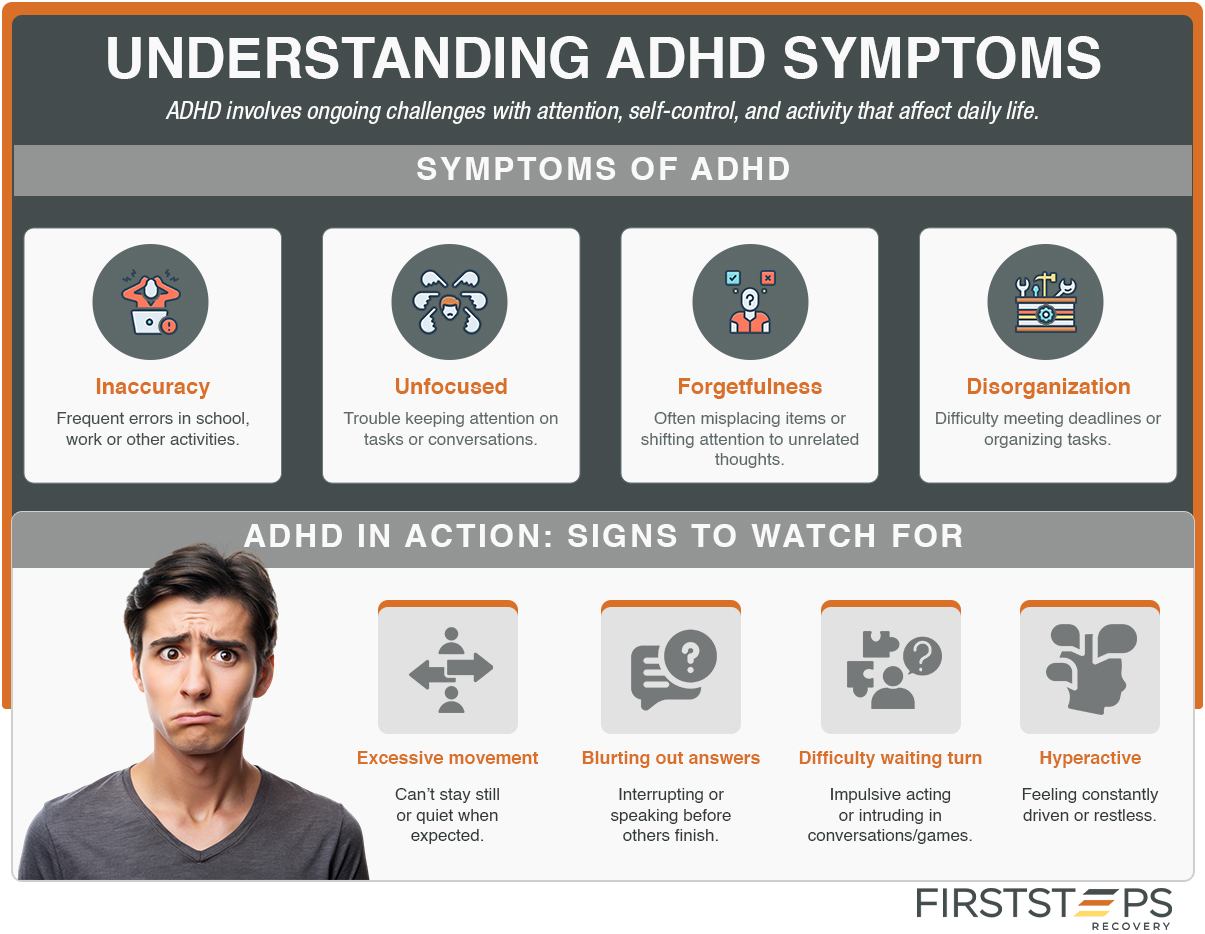
The core symptoms of ADHD can be put into three categories: inattention, hyperactivity, and impulsivity. While the symptoms of ADHD can vary from person to person, common signs include:
Individuals with ADHD may also experience challenges with emotional regulation and executive functioning skills. Executive function refers to a set of mental skills that help people plan, organize, and complete tasks. Executive dysfunction is a common challenge for individuals with ADHD, affecting their ability to plan and organize.
Adults with ADHD may continue to experience symptoms and face unique challenges, including a higher prevalence of substance use and difficulties with treatment adherence.
Difficulties in these areas can make it challenging for individuals with ADHD to follow through with responsibilities and meet expectations in different settings. Despite these challenges, with the help of our experiential and evidence-based therapies, individuals with ADHD can learn to manage their symptoms effectively and thrive in their personal and professional lives.
Just like with all mental conditions, not everyone with ADHD (or even ADHD symptoms) is “doomed” to develop substance abuse. Treating ADHD with medication actually correlates with lower rates of addiction than the average person. But the impulsivity and difficulty with self-regulation associated with ADHD make having the condition a risk factor for developing substance abuse. Childhood ADHD is a risk factor for later substance misuse and substance use disorder.
Many people use stimulant medication to manage ADHD symptoms, which carries a risk of dependence and addiction. But people with ADHD can also use substances like caffeine, powdered cocaine, and alcohol in an effort to manage symptoms.
A substance use disorder, sometimes referred to as an addiction, is a complex and multifaceted chronic medical condition that affects millions of individuals worldwide. It is characterized by compulsive drug or alcohol use despite negative consequences, often leading to a downward spiral of physical, mental, and social health.
Individuals struggling with an addiction may find it challenging to break free from the cycle of addiction. It can have far-reaching implications beyond the individual, impacting families, communities, and society as a whole. The stigma associated with addiction can create barriers to seeking help and receiving adequate support, further exacerbating the challenges faced by those affected.
It is crucial to approach someone struggling with a substance use disorder with compassion, understanding, and evidence-based interventions to address the underlying issues and promote long-term recovery. An addiction treatment program can help an individual overcome their addiction in a safe and supportive environment. Effective addiction treatment should also include relapse prevention strategies to support long-term recovery.
Individuals struggling with addiction and substance use disorder may experience changes in their behavior and mood. This can manifest as increased irritability, mood swings, secrecy, and isolation from loved ones. But the main symptom of unhealthy substance use is continuing to use addictive substances despite the negative effects on a person’s life.
A substance use disorder can have a profound impact on mental health. Certain risk factors (such as ADHD) can increase the likelihood of developing a substance use disorder. Underlying mental health issues can complicate the recovery process and require a comprehensive treatment approach that addresses both the addiction and the co-occurring disorders. Seeking help from treatment programs is crucial in navigating the complex interplay between addiction, mental health, and overall wellness.
When it comes to ADHD and addiction treatment, a comprehensive approach is necessary. It is essential to address both conditions simultaneously to achieve long-term recovery. When a person knows how substance use affects their ADHD symptoms (and vice versa), they can better manage their disorder and maintain sobriety.
It should be noted that ADHD is not considered to be a curable condition. The treatment of ADHD in individuals with co-occurring addiction often requires a combination of pharmacological interventions and behavioral therapies to effectively manage both conditions. Treating the two as comorbid disorders is more likely to produce positive results in adults with ADHD.

Dual diagnosis refers to the co-occurrence of a substance use disorder and a mental health disorder (such as ADHD). When someone has a dual diagnosis, both conditions need to be treated simultaneously for effective recovery.
Integrated dual diagnosis treatment is considered the gold standard for addressing both ADHD and addiction. Individuals with dual diagnosis often face a myriad of challenges, as the symptoms of one condition can exacerbate the other, leading to a vicious cycle of self-medication and worsening mental health. This complex interplay requires a comprehensive treatment approach that addresses both the substance use disorder and the mental health disorder concurrently.
Dual diagnosis treatment typically involves a combination of medication, therapy, and support services. Medications may be prescribed to help manage symptoms of ADHD and address any underlying mental health issues. Therapy, such as individual therapy for addiction, can help individuals develop coping skills and strategies in ADHD and addiction treatment. Support services, such as peer support groups and family therapy, can also be beneficial in the recovery process.
Dual diagnosis treatment often includes a comprehensive assessment to identify all co-occurring disorders and develop a personalized treatment plan. This assessment may involve medical professionals, mental health specialists, and addiction counselors working together to address the complex needs of individuals with dual diagnoses. Case management services can help coordinate care and support recovery for individuals with dual diagnoses.
At First Steps Recovery in Fresno County, CA, we understand the unique challenges faced by individuals in treatment for ADHD and addiction. Our experienced team of professionals is dedicated to providing personalized, evidence-based care to address both conditions effectively.
Our dual-diagnosis treatment program incorporates a range of therapeutic modalities, including individual counseling, group therapy, and holistic approaches. Individual counseling sessions are tailored to address specific issues related to ADHD and substance abuse, helping clients gain insight into their behaviors and develop coping strategies.
Our holistic approach encompasses a variety of complementary therapies such as yoga, mindfulness meditation, and art therapy. These practices aim to promote overall well-being and enhance the mind-body connection, offering clients alternative ways to manage stress, improve focus, and cultivate a sense of inner peace.
Aftercare planning is an essential part of our program, ensuring clients have ongoing support and resources as they transition out of treatment.
If you or a loved one has ADHD and requires addiction treatment, we are here to help. Contact us today to learn more about our comprehensive dual-diagnosis treatment program in Fresno County, CA.