


Bipolar Disorder and Addiction Treatment

Is Your Addiction Treatment Covered by Insurance? Check Your Benefits
Describe What You or Your Loved One Is Struggling With Right Now
24/7 Confidential Free Helpline Is Available. Speak With Someone Today

WHAT TO EXPECT

Like other mental health conditions, bipolar disorder can make daily life difficult. This can lead to self-medicating with drugs or alcohol to cope with symptoms. Approximately 60% of individuals with bipolar disorder have a history of substance abuse. Individuals with bipolar I disorder are nearly six times more likely to develop a substance use disorder than the general population. Self-medicating with drugs or alcohol can also worsen bipolar symptoms and create even more negative consequences within a person’s life.

The best option for treating bipolar disorder and drug or alcohol addiction is through a recovery program that takes a dual diagnosis approach. Both conditions must be treated at the same time, with strategies that can alleviate stress and/or symptoms of the bipolar disorder without relying on addictive substances for relief.

Woman embracing older woman in bipolar disorder and addiction treatment in Fresno County

What is Bipolar Disorder?

Formerly called “manic depression,” bipolar disorder is a mental health condition where people are likely to experience mood changes that range from manic highs to depressive lows.

Bipolar disorders, including Bipolar I and Bipolar II, are mental health conditions characterized by significant mood swings. Cyclothymia disorder, a milder form of bipolar disorder, features these same cycles of emotions taking place with lower intensity or length. Bipolar disorder requires a professional diagnostic assessment to fully determine what type of bipolar disorder the person is experiencing.

Most people with bipolar disorder are diagnosed in their late teens or early adulthood. The drastic shifts in demeanor can cycle quickly or slowly, depending on the person. Substance use disorder may complicate the diagnosis process, as it may be unclear what is due to bipolar disorder and what is attributable to drug abuse (or withdrawal symptoms).

Types of Bipolar Disorder

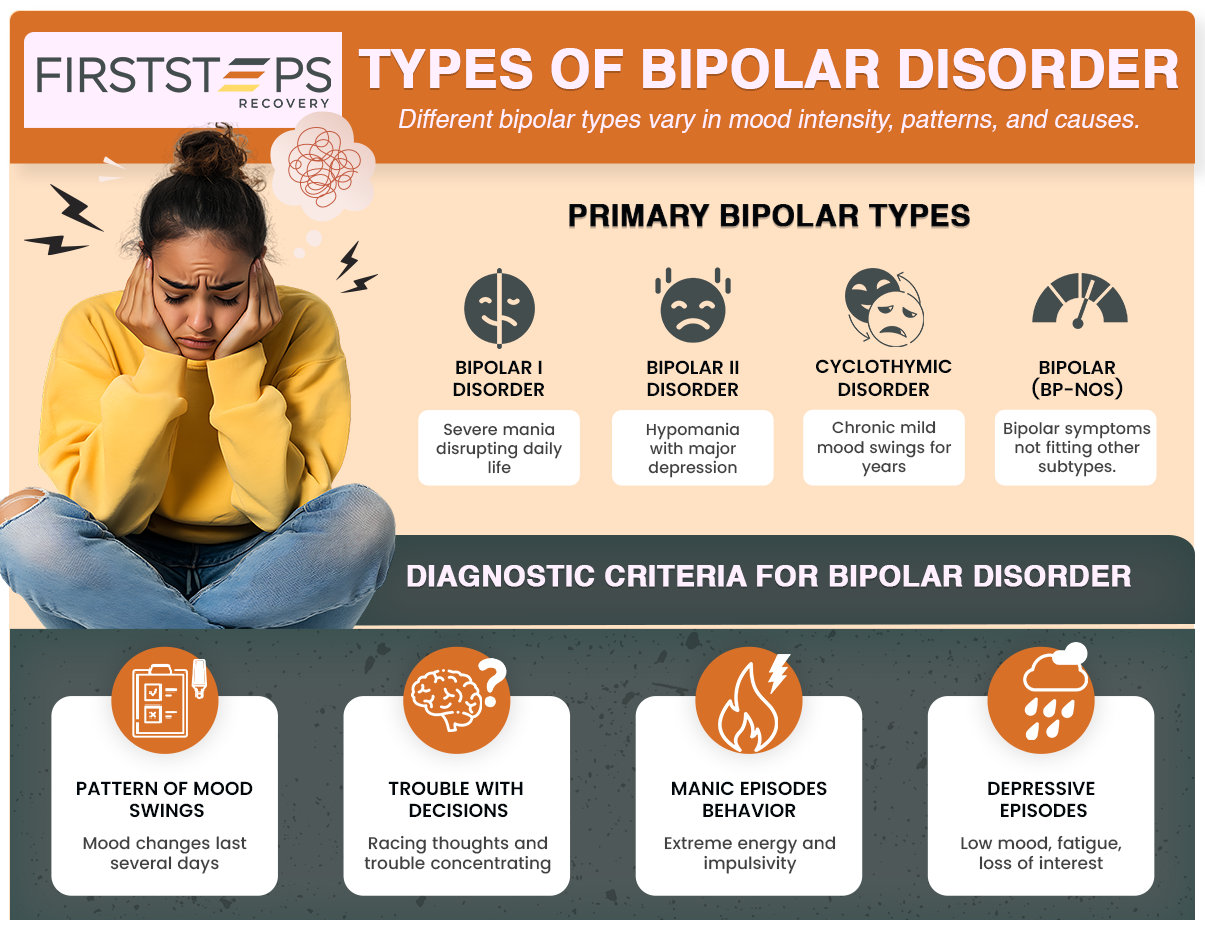
Types of bipolar disorder and diagnostic criteria for bipolar disorder

There are several types of bipolar disorder, each defined by its unique pattern of mood swings. These include:

  • Bipolar I Disorder: Characterized by manic episodes lasting at least seven days, or severe enough to require hospitalization.
  • Bipolar II Disorder: Marked by less severe manic episodes, known as hypomania, and depressive episodes.
  • Cyclothymic disorder: A milder form of bipolar disorder with less extreme mood swings that last for at least two years.
  • Bipolar Disorder Not Otherwise Specified (BP-NOS): Diagnosed when an individual experiences symptoms of bipolar disorder but does not meet the criteria for any other subtype.

Regardless of the type, it is important to note that bipolar disorder is a lifelong condition that requires ongoing management. Treatment typically involves a combination of medication, different forms of therapy (depending on the individual), and lifestyle changes.

Signs and Symptoms of Bipolar Disorder

Recognizing the signs and symptoms of bipolar disorder is crucial for early intervention and effective treatment. The symptoms of bipolar disorder can vary from person to person, and may include the following:

  • Extreme mood swings, ranging from euphoria and hyperactivity to sadness and hopelessness
  • Irritability or agitation during manic episodes
  • Difficulty concentrating or making decisions
  • Changes in sleep patterns, such as insomnia or excessive sleep
  • Increased energy and activity levels
  • Rapid speech and racing thoughts
  • Engaging in risky behaviors, such as impulsive spending
  • Feeling of guilt or worthlessness during depressive episodes

Bipolar disorder frequently co-occurs with substance use disorders (SUD). If you or someone you know is experiencing these symptoms, it is essential to seek help from a healthcare professional at an addiction treatment program.

Who is Most Likely to Have Bipolar Disorder?

Bipolar disorder is a mental illness that can affect anyone, but certain factors increase the likelihood of developing the condition. Genetics plays a significant role, as people with a family history of bipolar disorder are at a higher risk.

Substance use itself is a significant risk factor for increased intensity of bipolar symptoms. Many people with bipolar disorder turn to drugs or alcohol to self-medicate their symptoms, which can lead to addiction and exacerbate mental health conditions. Traumatic experiences, such as abuse, can increase the likelihood of developing co-occurring disorders like bipolar disorder. Environmental factors (such as stressful life events) may also contribute to the onset. A history of other mental health conditions (such as depression) may indicate that someone may be suffering from bipolar disorder. It can also make them more susceptible to developing substance abuse.

Recognizing risk factors can help in creating a more targeted and effective treatment approach. But it’s important to note that bipolar disorder can affect people across all ethnic groups, and the rates of diagnosis for bipolar disorder are fairly equal between men and women. Social and economic class, religion, or location do not make someone immune to receiving a diagnosis of bipolar disorder.

The Effects of Bipolar Disorder on Mental Health

Woman reassuring a man among a support group of people wearing fatigues

Bipolar disorder is a complex mental health condition that can have a significant impact on a person’s well-being. Both bipolar disorder and substance use can cause physical and chemical changes in the brain, particularly in areas related to mood regulation. The condition can affect a person’s mood, energy levels, and ability to function in daily life. When bipolar disorder and addiction occur together, the person may experience a higher risk of more severe manic episodes and increased risks of violence and suicide.

People with bipolar disorder may experience:

Mood swings

Bipolar disorder is characterized by recurring episodes of mania, hypomania, or depression. These mood swings can be intense and unpredictable, making it challenging to manage daily life.

Bipolar disorder can affect a person’s cognitive function on a basic level. It may affect attention, memory, and decision-making.

Someone with bipolar disorder may struggle with emotional regulation, leading to intense emotional experiences that can affect their actions. Before their diagnosis, they may confuse a manic or depressive episode with true emotions and feel a sense of helplessness.

Bipolar disorder can disrupt sleep patterns, leading to insomnia, sleep deprivation, or irregular sleep schedules. This can impact overall emotional regulation.

Bipolar disorder and its effects on a person’s actions can affect a person’s relationships with family and friends, leading to social isolation and feelings of loneliness. People with bipolar disorder have a suicide risk over ten times as high as the general population.

It is essential to seek professional help if you or someone you know is experiencing symptoms of bipolar disorder. With proper treatment, it is possible to manage the condition and improve mental health and well-being.

The Connection Between Bipolar Disorder and Addiction

Like many other mental health disorders, bipolar disorder has the potential to affect a person’s quality of life. This may lead them to attempt to cope through the use of drugs or alcohol. Individuals diagnosed with bipolar disorder may have a higher inclination toward alcohol abuse due to its availability and social acceptance as a comforting and mood-altering tool.

These substances may provide a degree of relief from symptoms of bipolar disorder, but this temporary relief is offset by a significant potential of developing an addiction. Substance abuse also has the potential to worsen symptoms of bipolar disorder over time. Depending on the addictive substance, consistent use may lead to greater anxiety and increased severity of mood swings. The individual may feel a loss of control when using the substance, which can cause distress and a feeling of hopelessness.

Addiction can complicate personal relationships, leading to a weaker support system and alienation from support. This emphasizes the importance of dual diagnosis treatment that takes mental health conditions into account when developing treatment plans for addiction.

What is Dual Diagnosis Treatment?

Younger woman reassuring older woman with bipolar disorder holding folder of papers

Dual diagnosis treatment is a specialized form of care that recognizes and addresses the complex interactions between mental health conditions and substance abuse disorders. By simultaneously targeting both conditions, dual diagnosis treatment aims to provide individuals with comprehensive and effective care that leads to long-term recovery.

When embarking on dual diagnosis treatment, individuals undergo a thorough assessment process to identify the specific needs and challenges they face. This assessment helps healthcare providers develop personalized treatment plans that cater to the unique circumstances of each individual. Through a combination of medication, therapy, and support services, dual diagnosis treatment offers a holistic approach to addressing the interconnected issues of mental health and substance abuse.

One of the key components of bipolar dual diagnosis treatment is therapy, which plays a crucial role in helping individuals understand and manage their conditions. Cognitive-behavioral therapy (CBT), for example, is commonly used to help individuals recognize and change negative thought patterns and behaviors. Dialectical Behavior Therapy (DBT) can also be useful for emotional regulation in individuals with bipolar disorder and addiction. While there are many different treatment modalities available in dual diagnosis treatment, the exact combination of therapies and other interventions will depend on individual needs.

Aftercare and ongoing support are crucial for long-term success in recovering from co-occurring bipolar disorder and substance abuse. Making healthy lifestyle changes, such as incorporating regular exercise and a balanced diet, can support overall health and well-being. Family support is another critical element. With the right aftercare and support, individuals with bipolar disorder and addiction can achieve and maintain a stable and fulfilling life.

Get Help With Co-Occurring Bipolar Disorder and Substance Abuse at First Steps Recovery

Here at First Steps Recovery, we’re prepared to help individuals address both their substance abuse issues as well as co-occurring mental health conditions like bipolar disorder. We’ll support you from detox all the way through your treatment, and our trained staff assists individuals in developing the proper tools and coping skills to help ensure relapse is not a part of their future.

Bipolar disorder and addiction don’t have to determine the course of your life. Contact First Steps Recovery today to find out more.


Picture of Meet Our Team
Meet Our Team

From our certified therapists and nurses to our emotional support animal "Cooper", our entire team is dedicated to the health and success of our clients throughout our program and beyond.

Help Is Available. Speak With Someone Today.

Our admission team is available to help 24/7.

Have questions about how our treatment programs works? Let's talk.

Variety of Co-Occurring Mental Health Treatments We Offer

We treat a variety of different substance abuse and mental health issues at our facilities. Whether you find yourself or a loved one addicted to substance abuse or struggling with mental health disorders, we’re fully equipped to provide you with the help you need.
ADD & ADHD

ADHD, or ADD, is a common neurodevelopmental disorder with attention and impulse control difficulties that can lead to substance abuse. Treatment with therapy and medication is crucial.

Learn More
Anxiety Disorder

Anxiety disorder is a mental health condition characterized by excessive and persistent feelings of fear, worry, and apprehension that can significantly impact a person's daily life.

Learn More
Bipolar Disorder

Bipolar disorder is a mental health condition characterized by extreme mood swings, including episodes of mania (elevated mood and energy) and depression (low mood and loss of interest).

Learn More
Depression

Depression is a mental health disorder characterized by persistent sadness, loss of interest, and other emotional and physical symptoms

Learn More
Eating Disorder

An eating disorder is a mental health condition characterized by abnormal eating habits. Getting help is important to address physical and psychological health risks, improve quality of life, and promote recovery.

Learn More
Personality Disorders

Personality disorder is a mental health condition characterized by unhealthy patterns of thinking, behaving, and relating to others. Getting help is crucial to improve relationships, coping skills, and overall well-being.

Learn More
PTSD/Trauma

PTSD (Post-Traumatic Stress Disorder)/Trauma disorder is a mental healtah condition resulting from experiencing or witnessing traumatic events. Getting help is important to process trauma, reduce symptoms, and improve overall quality of life.

Learn More
Schizophrenia

Schizophrenia is a mental health disorder characterized by hallucinations, delusions, and disorganized thinking. Getting help is vital to manage symptoms, improve functioning, and enhance overall quality of life.

Learn More

Have questions about our substance abuse treatment programs? Let’s talk.

THERAPIES

Experiential Therapies & Evidence-Based Modalities in Fresno County

You’ll find we aren’t like typical addiction recovery programs here at First Steps Recovery. We have a variety of different therapies and on-site services that set us apart.

Clinical Therapies

Our detoxification program features 24-hour monitoring and professional guidance from licensed detox technicians.
Learn More

Experiential Therapies

A highly individualized treatment experience designed for lasting sobriety using evidence-bsed and holistic treatment options.
Learn More

Holistic Therapies

Our IOP offers individuals the ability to receive the high-quality, personalized level care of our rehab, but the flexibility to continue their daily lives.
Learn More

Aftercare Services

Individuals in the alumni program are invited to stay connected for meetings, events, and resources that are intended specifically for First Steps graduates.
Learn More

ALUMNI TESTIMONIALS

First Choice for Drug & Alcohol Detox in Fresno County

Learn why people choose to start their recovery at First Steps Recovery in Clovis, Fresno County.

Outstanding

5/5
My experience with First Steps and their entire team has not only helped me to gain sobriety but maintain it now for knots 18 months. The 24 or so days I spent there was the best thing that happened. My kids have their mom, the parents have their daughter but most importantly I have myself back!!

Dayatra L.

Amazing Experience

5/5
Amazing people. Super supportive and always there when you need them. My counselor, Amanda, makes it fun but also takes you to uncomfortable places in the best way. I recommend First Steps to anyone struggling with addiction.

Melissa B.

Above and Beyond

5/5
I attended First Steps outpatient program and was very happy with the help I received. I felt the staff genuinely cared about the health and well being of the people there. They went above and beyond to help me meet my goals and keep them.

Bruce G.

Have questions about how our alumni program works? Let's talk.

PAYMENT OPTIONS

Are You Covered for Addiction Treatment?

First Steps Recovery is an in-network provider with most insurances! Regardless of where you live, our skilled and compassionate drug treatment counselors in Fresno can help you and your family get the help you need to get on the road to recovery.
Anthem_600x172
aetna_600x172
kaiser_600x172
healthnet_600x172
halcyon

Accessibility Toolbar